



Looking for something specific?
At 9M India Limited, trust through quality, transparency, performance.
 19th May 2026

The pharmaceutical manufacturing industry is one of the most stringent industries, where there is no room for error. One mistake can be costly in terms of money and time. When it comes to generic medicines, India accounts for nearly 20% of the global market. Every tablet, capsule, injection or formulation that the manufacturers make and leave the facility eventually ends up in the hands of someone who depends on it. The patient using these solutions expects to recover, to heal and to relieve themselves of pain. The responsibility to cure someone and help them along their road to recovery, while using a treatment that is appropriate for most patients, is really important. This responsibility is what makes the pharmaceutical manufacturing and healthcare industry different from most other industries.
However, a single pharmaceutical solution goes through many stages before it arrives on the chemist’s shelf. One healthcare product needs strict stages, studies and hard work to keep consistency, compliance and high quality.
What the general public or consumers often don’t see is the amount of precision, planning, compliance, testing and operational discipline that goes into making that product in a consistent and responsible manner behind the scenes.
Today pharmaceutical manufacturing is changing quickly. Analysts and researchers say generic medicines can reduce treatment costs by 80-90%. This means a huge part of the population is dependent on pharmaceutical solutions. The demands of global healthcare are increasing, regulations are evolving and becoming more strict, supply chains are becoming more unpredictable than ever, and manufacturers are being asked to deliver faster while maintaining uncompromised quality standards. This also involves staying updated on evolving healthcare issues and diseases, as well as studying body analysis and requirements for different body types. One of the biggest challenges the industry faces today is finding a way to balance all of these factors together.
At 9M India, we believe that we cannot build healthcare solutions based only on production capacity, but rather there needs to be reliability, accountability, and consistency, along with systems that are going to be there for people for a long time.
Pharmaceutical manufacturing has many common hurdles and problems that plague it. Let’s discuss the top three challenges and how 9M India addresses them.

One of the key challenges in the field of pharmaceutical manufacturing is to ensure the same quality for each manufactured batch. All manufactured solutions pass through all the manufacturing stages, from the selection and verification of raw materials to the safe packaging.
In many industries, people might not detect such small inconsistencies or require them to be changed. But in pharmaceutical solutions, even a small deviation in quantity or a small defect in quality check-ins can cancel the whole batch. Even the slightest mistake can affect product reliability, safety, compliance and ultimately patients’ trust. When making pharmaceutical solutions, consistency is key, because that’s where clients know who to trust for a reliable pharmaceutical manufacturing contract.
As demand increases and production scales up, it becomes harder to maintain this consistency. All processes need to be controlled, and every step must be taken with care. Every single batch that goes to government hospitals and healthcare institutions has to meet the same standards, every single time.
That means :
9M India is dedicated to manufacturing consistency with a focus on WHO-GMP aligned manufacturing and compliance-driven systems. We know there are no shortcuts to reliable healthcare manufacturing, and thus, we operate through systems that continue to run with precision, regardless of the scale.

The pharmaceutical manufacturing industry is trying to keep up and improve in every possible way in today’s fast-paced world. The pharmaceutical manufacturing industry is continuously adapting to the changing requirements of healthcare and diseases, volatile global markets, and business and manufacturing, while also improving its pharmaceutical products.
In the pharmaceutical solution manufacturing industry, speed and timely delivery are important, but accuracy is most important. The manufacturing has to be precision-driven; no leniency or errors can be there. All manufacturing processes have many levels of checks, testing, validation and monitoring. Any leniency or error in the process may lead to wastage of product, batch failure, delay in manufacturing processes, regulatory issues and supply disruptions. The challenge is not just about manufacturing on a larger scale but also about manufacturing responsibly while maintaining the same level of world-class quality and reliability throughout the process.
9M India’s manufacturing systems are developed with a high emphasis on operational consistency and process-driven execution. The goal is not just to produce in an efficient manner but to do so without compromising on the quality standards for efficiency.
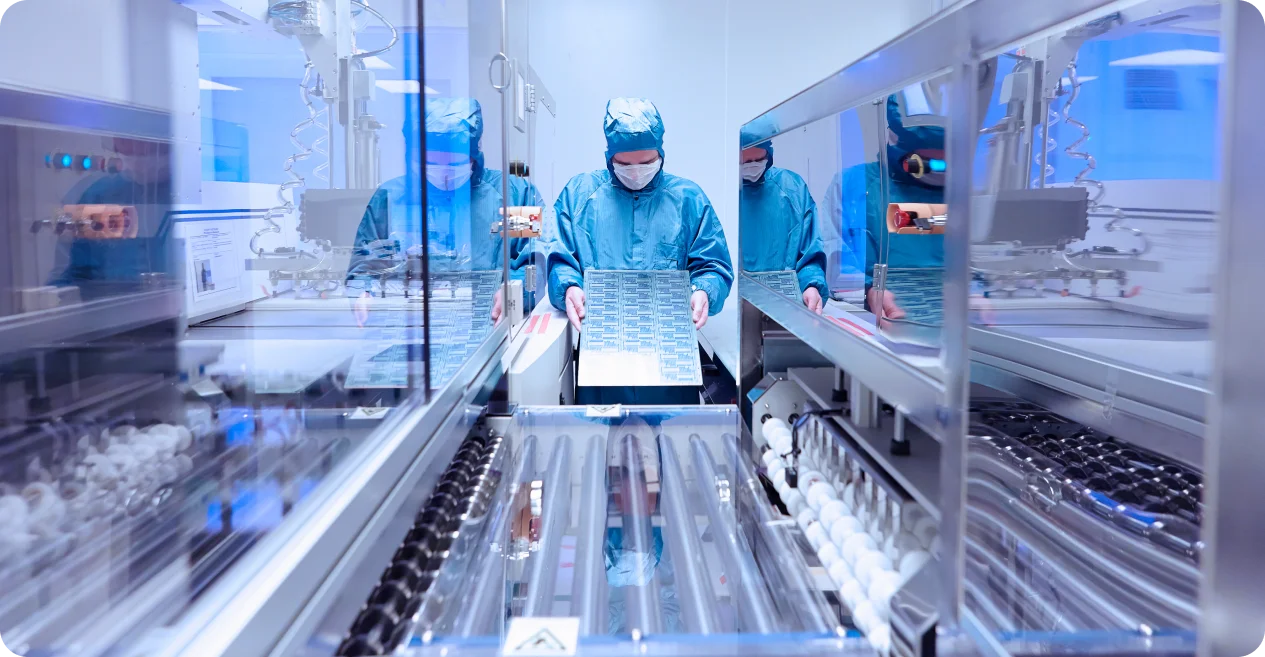
The pharmaceutical industry is among the most heavily regulated industries in the world and rightly so. Manufacturers are required to meet strict standards for safety, quality control, documentation and manufacturing practices for the patients that will use these solutions.
Pharmaceutical manufacturers must ensure that their pharmaceutical solutions are always in line with globally recognised regulatory standards. They also keep up with the regulatory expectations that are constantly changing in both domestic and international markets. This task can be very demanding for manufacturers, as there are several things that need to be closely handled; that is, making sure that all processes are properly documented and that all systems are traceable. Manufacturers also make sure that each stage of manufacturing has certain standards to avoid small compliance gaps that can lead to delays, audits, recalls or disruption of access to markets. That’s why pharmaceutical compliance cannot be an additional process but must be a constant priority. It has to be built into the everyday framework of manufacturing.
Aligned with WHO-GMP standards, 9M India manufactures pharmaceutical solutions with an emphasis on the value of disciplined and responsible manufacturing practices. Strong compliance systems help build manufacturing environments that prioritise quality and operational accountability.
Pharmaceuticals and the healthcare industry are two of the industries that can neither stop nor afford to stop. As healthcare needs continue to grow across the globe, we will continue to see change, expansion and improvement in pharmaceuticals. manufacturing. This means that technology will continue to change, regulations will continue to become stricter and operational expectations will continue to climb. But underlying all these changes, the baseline of pharmaceutical manufacturing will be the same: responsibility & reliability.
This is the philosophy that guides 9M India’s approach to manufacturing, because we believe that healthcare solutions should be delivered responsibly and consistently, especially when they are large-scale, and a long-term commitment to quality should be prioritised. In pharmaceutical manufacturing, success is measured by the amount of trust you can build into it.
Explore our latest articles featuring expert insights, trending topics, and practical knowledge to help you make
informed decisions and stay updated with industry developments.

At 9M India Limited, trust through quality, transparency, performance.