

How Pharmaceutical Creams Are Made | 9M India

29th Jul 2026

How Pharmaceutical Creams Are Made

How Pharmaceutical Creams Are Made

Squeeze a dab of medicated cream onto your finger and it looks almost boring, just a smooth white paste. What most people never see is that this “boring” paste is one of the more difficult things to manufacture correctly in the entire pharmaceutical industry. Oil and water do not want to stay mixed. Left alone, they separate, the way a salad dressing does if it sits too long. A Pharma medical cream has to fight that natural separation for the entire length of its shelf life, sometimes two years, while still delivering an exact, measured dose of active drug through the skin every single time it is applied.

This article pulls back the curtain on that process. It is written for procurement teams, regulatory professionals, distributors and anyone evaluating a cream manufacturing partner who wants to understand what actually happens between raw ingredients and a finished, GMP compliant tube.

Why Creams Are Harder to Make Than They Look

A tablet is, chemically speaking, a fairly settled object once it is compressed. A cream is not. It is a suspended argument between two liquids that do not want to mix, held together by an emulsifier that is essentially a peacekeeper. That peacekeeping arrangement can break down if temperature control slips during manufacturing, if mixing speed is wrong, if the wrong emulsifier ratio is used, or if the product is stored somewhere too hot or too cold after it leaves the factory.

This is why cream manufacturing facilities invest so heavily in two things most people never think about: emulsification technology and stability testing. Get either one wrong and the product that looked perfect on day one can separate, thin out or grow unstable months later, long after it has already reached a pharmacy shelf or a hospital ward.

The Two Families of Cream

Pharmaceutical creams fall into two broad emulsion types, and the difference matters more than it seems.

  • Oil in water emulsions are creams where tiny oil droplets float inside a continuous water phase. These feel light on the skin, absorb quickly and rinse off easily. Many dermatological and cosmeceutical creams use this form.
  • Water in oil emulsions flip that structure. Water droplets are suspended inside a continuous oil phase. These tend to feel richer and more occlusive, and are often chosen for drier or more damaged skin, since the oil phase forms a protective layer that slows moisture loss.

Choosing between the two is not a style decision. It depends on the drug’s solubility, how the formulation needs to release the active ingredient, and how the product needs to feel and behave on the specific area of skin it is designed for.

Step by Step: How a Pharmaceutical Cream Actually Gets Made

  • Formulation and pre formulation study. Before any manufacturing begins, a formulation scientist studies how the active ingredient behaves: its solubility, its stability at different pH levels, how it reacts with other ingredients, and whether it is sensitive to heat or light. This early study decides almost everything that follows.
  • Preparing the two phases separately. The oil phase, containing waxes, fatty alcohols and emollients, is prepared and heated separately from the water phase, which contains purified water and any water soluble ingredients. Each phase is brought to a specific, carefully controlled temperature.
  • Emulsification and homogenisation. This is the heart of the process. The two phases are combined and processed through high shear equipment, typically a vacuum homogeniser, which breaks the dispersed phase into extremely small, uniform droplets. Vacuum processing matters because it keeps air out of the mixture, which would otherwise cause oxidation and degrade sensitive ingredients over time. Every parameter here, mixing speed, temperature, vacuum level, the exact order ingredients are added, is fixed by validated, documented procedure rather than adjusted by a technician’s judgment on the day.
  • Cooling and active ingredient addition. Many active ingredients cannot tolerate the heat used earlier in the process, so they are added once the bulk emulsion has cooled to a safe temperature. Timing this correctly protects the potency of the drug.
  • In process quality checks. Before a batch is approved for filling, technicians test appearance, pH, viscosity and uniformity to confirm the emulsion has formed correctly.
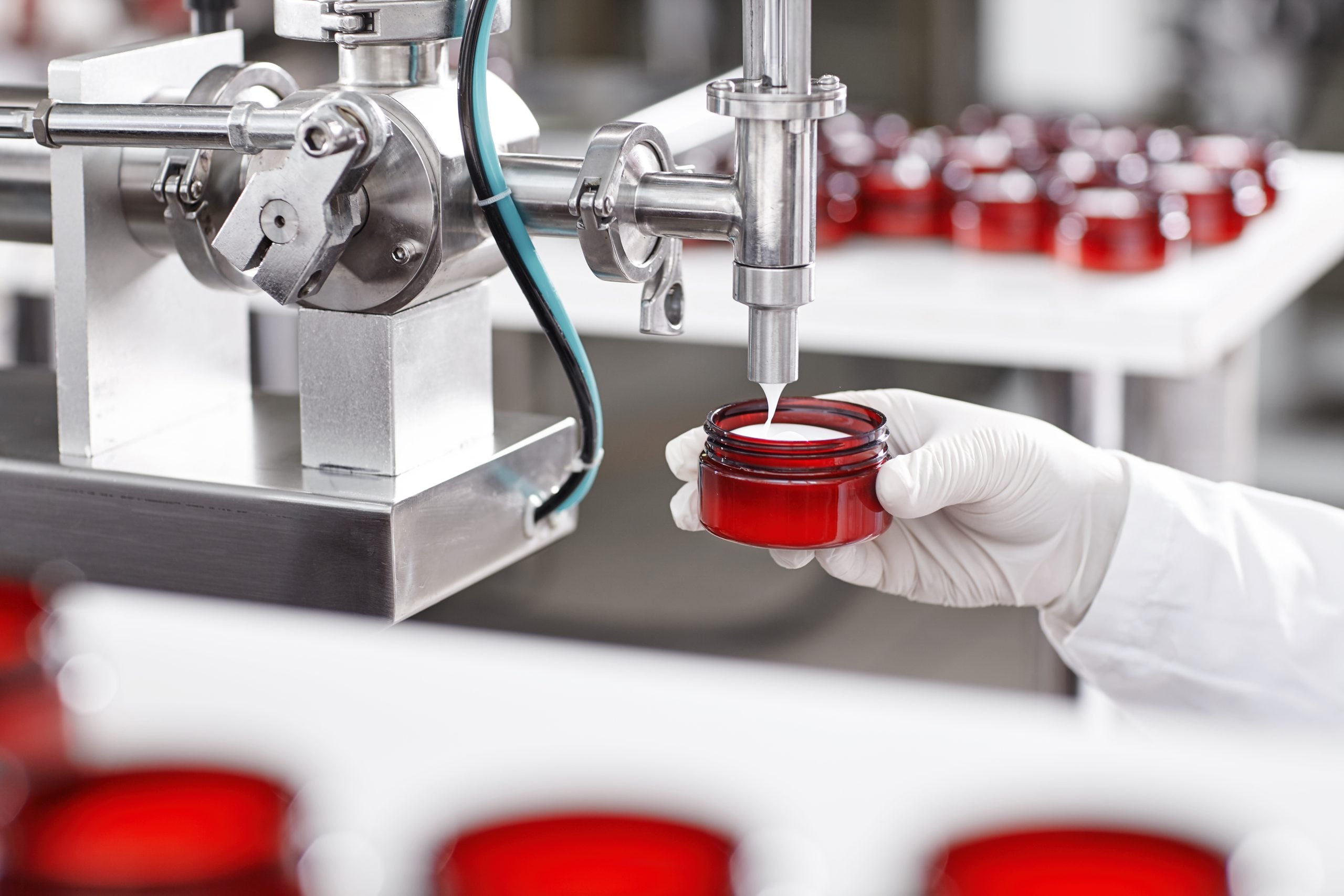
  • Filling and packaging. Finished cream is filled into aluminium tubes, laminate tubes or wide mouth jars, with fill weight accuracy and seal integrity validated to keep the product stable and uncontaminated until it is opened by a patient.

The Real Test: Will It Still Be Stable a Year From Now?

  • Passing quality checks on day one is the easy part. The harder question every manufacturer has to answer is whether the cream will still be stable, safe and effective eighteen months later, sitting in a warm pharmacy storeroom or a hospital supply cabinet.
  • To answer that question before the product ever reaches a patient, manufacturers run a series of deliberately harsh tests.
  • Centrifuge testing spins the product at high speed to accelerate and expose any tendency toward phase separation that might otherwise take months to appear naturally.
  • Freeze thaw cycling repeatedly swings the product between very cold and warm temperatures to stress test the emulsion’s structural integrity.
  • Long term and accelerated stability studies store the product at controlled temperature and humidity conditions, commonly twenty five degrees Celsius at sixty percent relative humidity for long term data, and forty degrees Celsius at seventy five percent relative humidity for accelerated data, tracking how the product changes over time.
  • Franz diffusion cell testing, used especially for topical pain relief and dermatological creams, measures how efficiently the active ingredient actually releases from the cream base and passes through a membrane, simulating how it would behave on real skin.
  • A product that only passes appearance and assay testing on the day it is made, without this fuller stability record, is essentially an unknown quantity by the time it reaches month twelve.

The Rules Nobody Sees but Everyone Relies On

  • Cream manufacturing in India operates inside a defined regulatory structure that exists specifically to protect the patient who eventually applies the product.
  • WHO GMP certification confirms that a facility’s premises, equipment, documentation and quality systems meet World Health Organization guidelines, and it is treated as a baseline expectation by institutional buyers, tender authorities and international importers.
  • DCGI, the Drugs Controller General of India, approves individual formulations, confirming that a specific product has been evaluated and permitted for manufacture and sale.
  • Schedule M, under India’s Drugs and Cosmetics Rules, lays out the specific premises, equipment and quality control requirements for manufacturing pharmaceutical dosage forms, including semi solid products like creams.
  • For a buyer, these are not just certificates hanging on a wall. They mean batch records, validation studies and stability files actually exist and can be produced quickly if a regulatory question or product complaint ever comes up after launch.

Where Cream Formulations Show Up in Everyday Medicine

  • Cream manufacturing supports a surprisingly wide range of medical needs, each with its own formulation demands.
  • Dermatological creams include corticosteroid, antifungal, antibiotic, antiviral, anti acne, keratolytic and depigmenting formulations.
  • Topical analgesic creams use NSAID or counterirritant ingredients for musculoskeletal pain relief.
  • Wound care creams rely on antimicrobial and healing agent ingredients.
  • Gynecological creams require pH matched formulation, typically around pH 3.8 to 4.5, along with a viscosity suited to applicator based delivery.
  • Cosmeceutical and skin care creams cover emollients, sunscreens and vitamin based formulations.

Each of these categories needs its own base viscosity, penetration profile and stability approach, which is exactly why genuine cream manufacturing expertise does not transfer smoothly from one therapeutic category to another without dedicated formulation work behind it.

Six Questions Worth Asking Before You Choose a Cream Manufacturing Partner

  • Does the facility currently hold WHO GMP certification, and can it show DCGI approval for the exact formulations you need?
  • What emulsification equipment does it actually use, a validated vacuum homogeniser with documented process parameters, or older, less controlled open mixing equipment?
  • What stability evidence exists for the specific formulation, centrifuge testing, freeze thaw cycling and full ICH aligned stability studies, or only basic appearance checks?
  • Can the manufacturer produce complete documentation quickly, including certificates of analysis, certificates of conformance, stability records and export or tender dossiers?
  • Does it manufacture across the therapeutic range you need, or will you end up sourcing dermatological, gynecological and analgesic creams from separate suppliers?
  • What packaging formats and fill accuracy validation are already in place for the tube or jar sizes your market requires?

A manufacturer who can answer all six questions with actual documented evidence, rather than a verbal assurance, is far less likely to hand you a stability complaint, a tender rejection or a regulatory query a year down the line.

Why This Matters for Buyers Sourcing From India

India’s semi solid manufacturing base has grown substantially by combining formulation expertise, cost efficiency and a regulatory framework aligned with WHO GMP standards. For companies outsourcing cream production for domestic distribution, institutional tenders or export, working with an established, WHO GMP certified <a href=”https://www.9mindia.in/products/pharma-medical-cream-manufacturer/”>Pharmaceutical Cream Manufacturer in India</a> means the emulsification technology, stability protocols and documentation described in this article are already built and proven, rather than something a buyer has to build from scratch with an unproven supplier.

Frequently Asked Questions

What is the actual difference between a cream, an ointment and a gel? A cream is an emulsion of oil and water held together by an emulsifier, designed to spread and absorb easily. An ointment is usually anhydrous and greasier, forming a protective barrier on the skin. A gel is typically an aqueous or hydroalcoholic system thickened with a gelling agent, and tends to feel lighter than either a cream or an ointment.

Why do some creams separate or turn watery over time? This is usually a sign that the emulsification process was not properly validated, or that the emulsifier system was never tested for long term stability under the storage conditions the product would actually face. Thorough centrifuge and freeze thaw testing during development exists specifically to catch this before the product ever reaches a shelf.

How long does stability testing take before a cream can launch? Accelerated stability studies, usually run at forty degrees Celsius and seventy five percent relative humidity, can produce preliminary data within three to six months. Confirmatory long term stability data, run at twenty five degrees Celsius and sixty percent relative humidity, typically continues for the full intended shelf life, often eighteen to twenty four months, running in parallel with market launch under standard regulatory provisions.

Do vaginal creams need different manufacturing controls compared to skin creams? Yes. Beyond ordinary emulsion stability, vaginal creams need pH matched formulation, a viscosity suited to applicator based delivery, and validated compatibility testing with the specific applicator device supplied alongside the product.

What documentation should a buyer ask for before finalising a cream manufacturing partner? At minimum, a current WHO GMP certificate, DCGI approval for the exact formulation, a Certificate of Analysis, a Certificate of Conformance, and stability data that covers the full intended shelf life and storage conditions of the product.

Can one facility really manufacture dermatological, gynecological and cosmeceutical creams together? Yes, provided the facility has validated, segregated processes and equipment cleaning procedures for each category. A facility with broad validated capability across these categories can be a genuine advantage for a buyer who would otherwise need multiple suppliers.

Final Thoughts

The next time a medicated cream feels unremarkable in your hand, it is worth remembering what stands behind it: temperature controlled phase preparation, vacuum homogenisation validated down to the mixing speed, stability studies stretching out over many months, and a regulatory paper trail built specifically so it can be checked whenever needed. For anyone responsible for sourcing these products, understanding this process is not just interesting background, it is the foundation for asking sharper questions and recognising the difference between a supplier who can prove their claims and one who can only repeat them.

This article is intended for informational and educational purposes for pharmaceutical industry professionals and does not constitute medical advice. Product specific manufacturing capabilities, certifications and formulation ranges should be verified directly with the relevant manufacturer.

Looking for something specific?

At 9M India Limited, trust through quality, transparency, performance.