


Looking for something specific?
At 9M India Limited, trust through quality, transparency, performance.
 30th Jul 2026
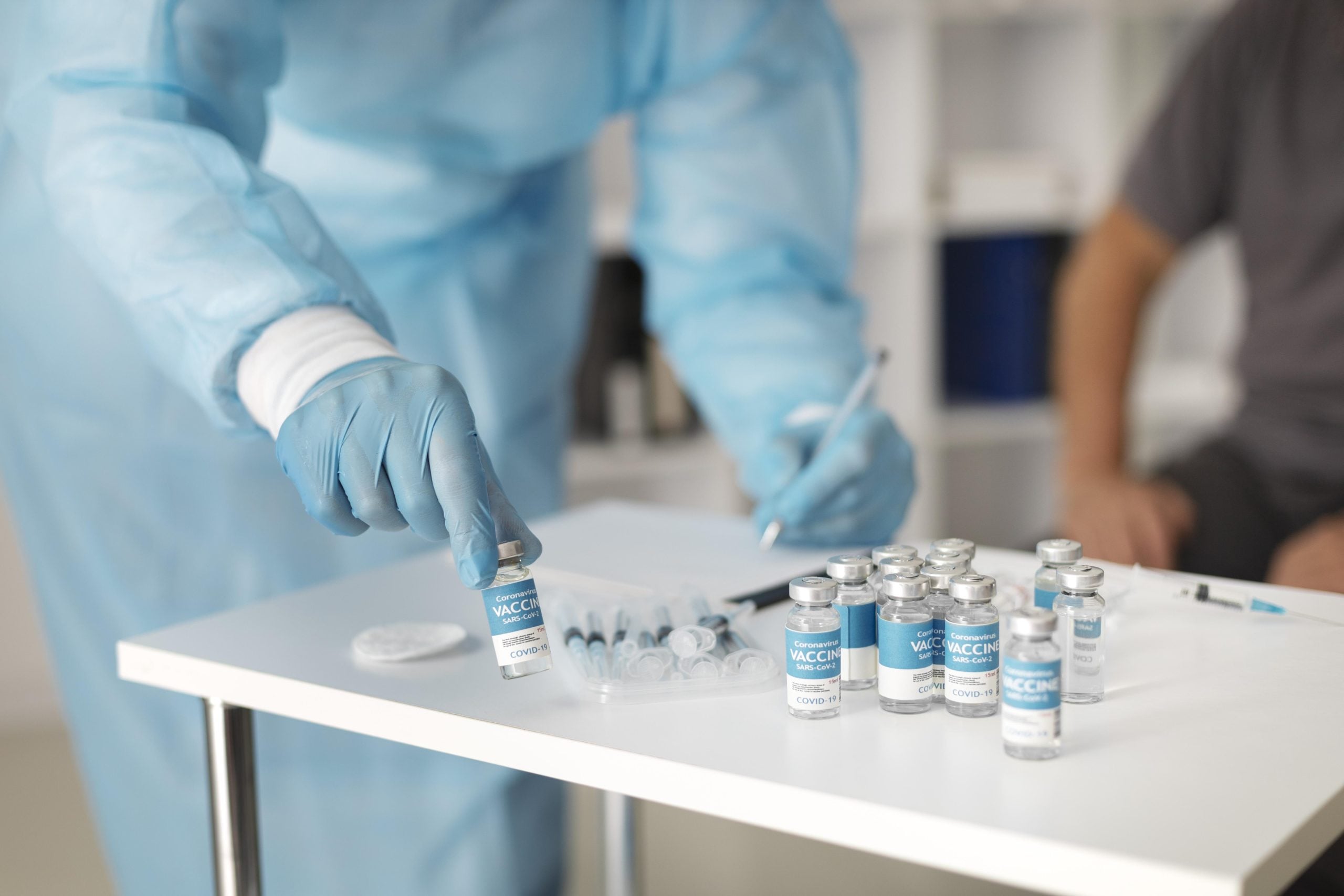
If you’ve ever received an antibiotic injection where the nurse mixed a powder with a liquid right before administering it, you’ve already encountered a dry injection, more accurately called a dry powder injection. It’s one of the three core formats of Small Volume Parenterals (SVP), alongside liquid vials and glass ampoules, and it exists to solve a very specific problem: some drug molecules simply cannot survive as a stable liquid.
This guide breaks down what dry powder injections are, why they’re manufactured this way, what the production process actually involves, and what separates a compliant manufacturer from one that just meets the bare minimum on paper.
A dry injection is a sterile pharmaceutical formulation supplied as a powder or lyophilized (freeze-dried) cake inside a sealed vial, rather than as a ready-to-use liquid. Before administration, a trained healthcare professional reconstitutes it, meaning they dissolve the powder using a specified diluent, such as Water for Injection (WFI) or normal saline, immediately before the dose is given.
The powder itself contains the active pharmaceutical ingredient (API), along with excipients that support stability, solubility, and, in freeze-dried products, the physical structure of the cake. Because the drug never sits in liquid form until the moment of use, its shelf life and stability are dramatically extended compared to a pre-mixed solution.
Not every injectable molecule can be filled directly into a vial as a liquid. A drug is typically formulated as a dry powder injection when one or more of the following apply:
Common therapeutic categories manufactured as dry powder injections include certain antibiotics (such as Ceftriaxone), proton pump inhibitors (such as Pantoprazole), and corticosteroids (such as Methylprednisolone), all molecules that are chemically unstable in aqueous solution over extended storage periods.
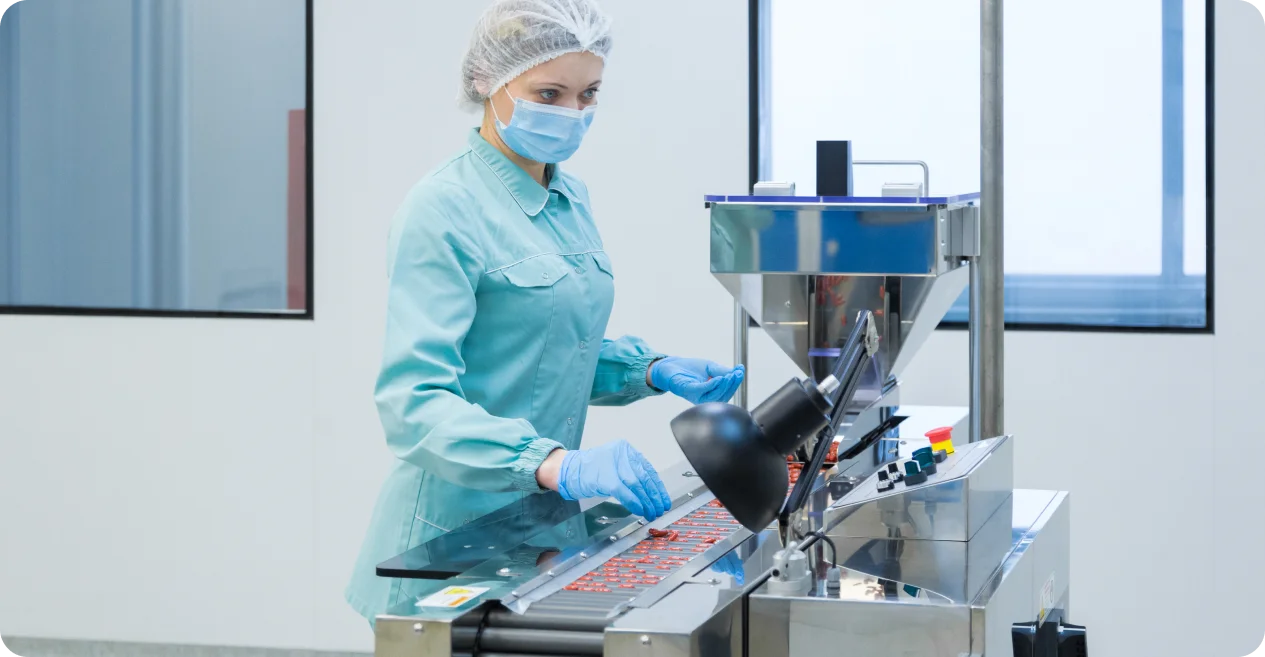
Because dry powder injections are sterile parenteral products, every stage of production happens under classified cleanroom conditions. There is no step in this process where contamination risk is treated as acceptable. A compromised batch isn’t a quality defect, it’s a patient safety event.
The API and excipients are weighed and dispensed in a controlled environment, following a validated formulation record. Any variation from the approved formula at this stage carries forward into every unit of the batch.
Unlike liquid filling, dry powder filling requires specialized equipment capable of accurately dosing fine powder into each vial without cross-contamination between units or exposure to ambient moisture. This step is typically performed under Grade A / ISO 5 conditions, the highest level of environmental control used in pharmaceutical manufacturing, within a Grade B / ISO 7 background environment.
Powder formulations are highly sensitive to residual moisture, which can accelerate degradation and compromise the product before it ever reaches a patient. Manufacturing lines for dry powder injections require active humidity control throughout the filling process, a capability that not every injectable facility is equipped to maintain consistently.
Vials are stoppered and crimp sealed immediately after filling to prevent any headspace contamination. Container closure integrity testing is performed to confirm the seal will protect sterility for the full labeled shelf life.
Many dry powder injections are filled under an inert gas headspace (such as nitrogen) to limit oxidative degradation. Headspace gas composition is tested as part of batch release to confirm the intended environment was achieved and maintained.
Before any batch is released, it must pass a defined panel of tests, including:
A batch that fails any of these parameters does not leave the facility, regardless of production schedules or delivery deadlines.
| Parameter | Liquid Vials | Glass Ampoules | Dry Powder Injections |
|---|---|---|---|
| Physical form | Ready-to-use solution | Ready-to-use solution | Powder, reconstituted before use |
| Best suited for | Molecules stable in aqueous solution | Single-use critical care molecules | Molecules unstable in solution |
| Shelf-life advantage | Moderate | Moderate | Typically longest |
| Extra step at point of use | None | Break the ampoule neck | Reconstitution with diluent |
| Example molecules | Paracetamol, Heparin, Ondansetron | Lidocaine, Ropivacaine, Dexamethasone | Ceftriaxone, Pantoprazole, Methylprednisolone |
Dry powder injections are widely regarded as one of the more technically demanding SVP formats to manufacture at scale, for a few reasons:
If you’re sourcing dry powder injections, whether for domestic institutional supply, export, or third-party/contract manufacturing, a few due-diligence checks matter more than a general company brochure:
These aren’t abstract compliance checkboxes. They’re the difference between a supply partner who can support an institutional tender or export registration without delay, and one who becomes a bottleneck at the worst possible time.
9M India operates a dedicated, WHO-GMP certified sterile injectable facility in Birkoni, Mahasamund, Chhattisgarh, with sterile powder filling lines built specifically to manage active moisture control and preserve powder integrity through the full approved shelf life. Every dry powder batch undergoes headspace gas analysis and container closure integrity testing before release, and all analytical and sterility testing is conducted in-house, not outsourced, including sterility testing, bacterial endotoxin (LAL) testing, and HPLC-based assay and related substance analysis.
Molecules currently manufactured in dry powder format include Pantoprazole and Methylprednisolone, alongside liquid vial and glass ampoule formats across the broader injectable portfolio. The facility operates at 177 million units of annual capacity and supplies domestic institutional buyers (including CGHS and ESIC programmes) as well as export partners across 15+ countries.
For a full breakdown of container formats, quality control protocols, and documentation turnaround, see the complete injection manufacturing company in India page.
What is a dry injection? A dry injection is a sterile drug product supplied as a powder inside a sealed vial. It is dissolved with a specified diluent immediately before administration, rather than being pre-mixed as a liquid.
Why are some injections manufactured as a powder instead of a liquid? Because some active ingredients are chemically unstable in water over time. Manufacturing them as a dry powder and reconstituting only at the point of use significantly extends shelf life and avoids potency loss.
What does “reconstitution” mean for a dry powder injection? Reconstitution is the process of dissolving the sterile powder using a specified volume of diluent, such as Water for Injection or normal saline, performed by a healthcare professional immediately before the dose is administered.
Which drugs are commonly manufactured as dry powder injections? Examples include certain antibiotics such as Ceftriaxone, proton pump inhibitors such as Pantoprazole, and corticosteroids such as Methylprednisolone, all molecules that degrade in aqueous solution over extended storage.
Is a dry powder injection more expensive to manufacture than a liquid vial? Generally yes. Powder filling requires specialized, moisture-controlled equipment and additional testing (such as headspace gas analysis and reconstitution validation) that liquid filling lines don’t require, making it a more technically demanding and equipment-intensive process.
How is sterility ensured in dry powder injection manufacturing? Through a combination of Grade A / ISO 5 aseptic filling environments, validated sterilization processes, continuous environmental monitoring, and in-house batch testing, including sterility testing, bacterial endotoxin (LAL) testing, and container closure integrity testing, before any batch is released.
What should a buyer check before sourcing dry powder injections from a manufacturer? Confirm the manufacturer holds facility-specific WHO-GMP certification for sterile injectable manufacturing, runs in-house sterility and LAL testing, has dedicated moisture-controlled powder filling equipment, and can supply documentation (COA, COC, stability data) within a defined turnaround time such as 24 to 48 hours.
Does 9M India manufacture dry powder injections? Yes. 9M India manufactures dry powder injections, including Pantoprazole and Methylprednisolone, from its WHO-GMP certified sterile facility in Birkoni, Chhattisgarh, with in-house sterility, LAL, and analytical testing on every batch. Full details are available on the injection manufacturing company in India page.
Explore our latest articles featuring expert insights, trending topics, and practical knowledge to help you make
informed decisions and stay updated with industry developments.

At 9M India Limited, trust through quality, transparency, performance.